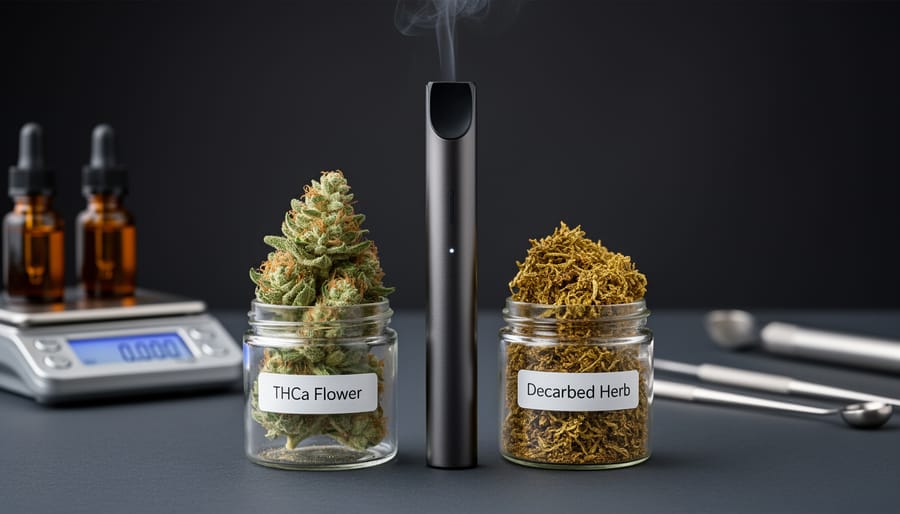
For most vaping enthusiasts, THC (the decarboxylated form) is the clear choice if you want the traditional psychoactive effects cannabis is known for, while THCa shines when you’re seeking potential wellness benefits without the high. The deciding factor comes down to heat: vaping automatically converts THCa into THC through decarboxylation, meaning your device temperature and product choice directly control your experience. For a detailed product comparison, check out this THCA vape breakdown.
If you’re new to vaping basics, understanding this chemistry matters more than you might think. THCa (tetrahydrocannabinolic acid) is the raw, non-intoxicating cannabinoid found in fresh cannabis plants. When exposed to heat above roughly 220°F, it loses a carboxyl group and transforms into THC, the compound responsible for the euphoric high. This process happens instantly when you vape, which is why temperature control becomes your most powerful tool for customizing effects.
The confusion many vapers face stems from a fundamental mismatch between product labels and actual experience. You might purchase a THCa-dominant cartridge expecting mild effects, only to feel fully intoxicated because your device heated it past the decarboxylation threshold. Conversely, experienced users who want maximum potency sometimes unknowingly choose products or settings that preserve THCa instead of converting it efficiently.
Temperature precision separates satisfying sessions from disappointing ones. Understanding how decarboxylation works lets you dial in exactly what you want, whether that’s the full psychoactive punch of converted THC or the gentler profile of minimally-heated THCa.
This guide breaks down the science in practical terms, compares both forms across the dimensions that matter for vaping, and helps you choose the right approach based on your goals. No chemistry degree required.
THCa vs THC: At-a-Glance Comparison
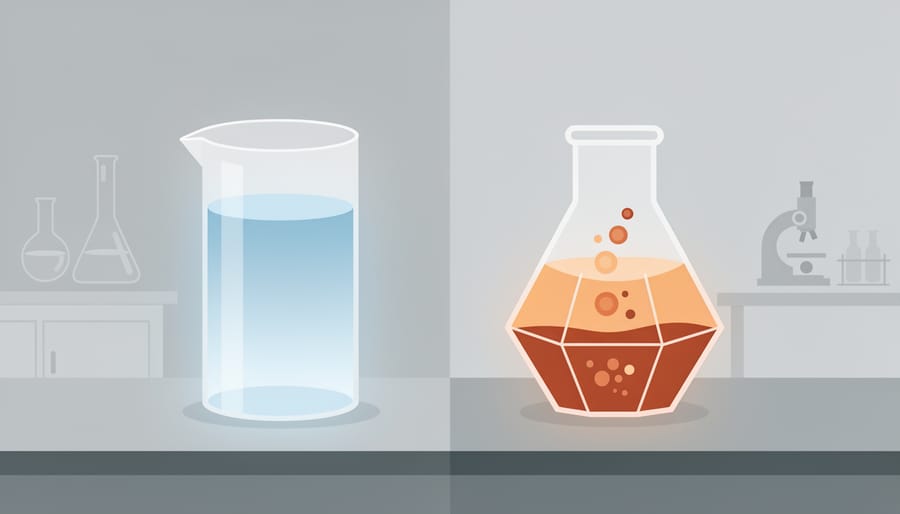
Before diving deeper, here’s a quick reference to help you understand the fundamental differences between these two cannabinoid forms for vaping:
| Feature | THCa | Decarboxylated THC |
|---|---|---|
| Psychoactive Effects | Non-intoxicating, no high | Produces euphoric, psychoactive high |
| Activation Temperature | Requires 220-315°F to convert | Vaporizes at 315-440°F |
| Chemical State | Raw, acidic precursor form | Activated, decarboxylated form |
| Best For | Wellness use, daytime function, avoiding intoxication | Recreational use, pain relief, traditional cannabis effects |
The key distinction centers on activation. THCa exists naturally in fresh cannabis and remains non-psychoactive until heat transforms it. When you vape at higher temperatures, that heat strips away a carboxyl group from THCa molecules, creating the THC that produces familiar cannabis effects. Lower-temperature vaping preserves more THCa, while higher temperatures complete the conversion to THC. Your vaping temperature essentially controls which form dominates your experience and determines whether you’ll feel intoxicated or simply benefit from cannabinoid exposure without the high.
What THCa and THC Are: Understanding the Basics
What Is THCa?
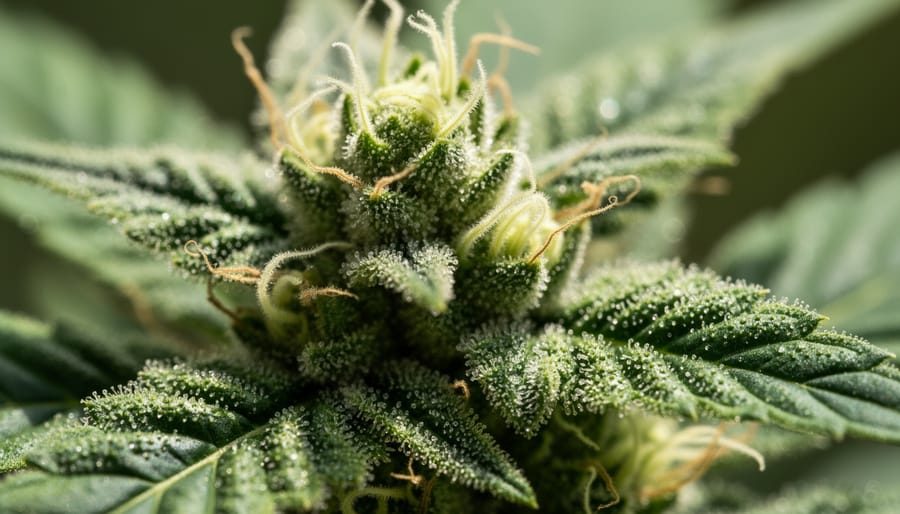
THCa (tetrahydrocannabinolic acid) is the raw, unprocessed form of the cannabinoid found in living and freshly harvested cannabis plants. Unlike its famous counterpart THC, THCa won’t get you high, regardless of how much you consume. This non-psychoactive property stems directly from its molecular structure.
At the molecular level, THCa contains an extra carboxyl group (COOH) attached to its structure. This additional molecular component changes everything about how the compound interacts with your body’s endocannabinoid system. The carboxyl group prevents THCa from binding effectively to CB1 receptors in your brain, which are the specific receptors responsible for producing psychoactive effects.
In fresh cannabis plants, THCa is the dominant cannabinoid, often comprising 10-20% or more of the plant’s weight in high-potency strains. The plant naturally produces THCa as part of its normal growth cycle, using it as a defense mechanism against pests and UV radiation. Every trichome glistening on a fresh cannabis flower contains primarily THCa, not THC.
This distinction matters significantly for vaping. When you examine lab reports for cannabis products, you’ll often see separate listings for THCa and THC. Fresh flower, live resin, and other minimally processed products retain high THCa levels. The compound remains stable at room temperature but begins transforming once exposed to heat or prolonged light exposure.
Understanding THCa’s non-intoxicating nature helps explain why eating raw cannabis won’t produce a high. The transformation to psychoactive THC requires specific conditions, which is where decarboxylation becomes essential for anyone seeking traditional cannabis effects.
What Is Decarboxylated THC?
Decarboxylated THC, formally known as delta-9-tetrahydrocannabinol, is the activated cannabinoid that produces the psychoactive effects most people associate with cannabis use. Unlike its precursor THCa, THC has undergone a chemical transformation that fundamentally changes how it interacts with your body.
The transformation happens when THCa molecules are exposed to heat. During this process, each THCa molecule sheds a carboxyl group (a cluster of carbon, oxygen, and hydrogen atoms) from its molecular structure. This removal might sound minor, but it’s crucial. That carboxyl group acts like a lock on a door, preventing THCa from fitting into your brain’s cannabinoid receptors. Once heat removes it, the resulting THC molecule can bind directly to CB1 receptors in your brain and central nervous system.
This binding action is what triggers the characteristic cannabis high: altered perception, euphoria, relaxation, changes in time perception, and heightened sensory experiences. The strength and nature of these effects depend on dosage, individual tolerance, consumption method, and the presence of other cannabinoids.
When you vape cannabis flower or concentrates, decarboxylation happens in real time as your device heats the material. The heat converts available THCa into THC, which then vaporizes and enters your bloodstream through your lungs. This is why vaping produces psychoactive effects even when starting with raw cannabis, which naturally contains mostly THCa.
Products labeled as THC cartridges or concentrates have typically been pre-decarboxylated during manufacturing, meaning the conversion has already occurred before you purchase them. These products contain THC in its active form, ready to produce effects as soon as it’s vaporized and inhaled.
Understanding the Decarboxylation Process
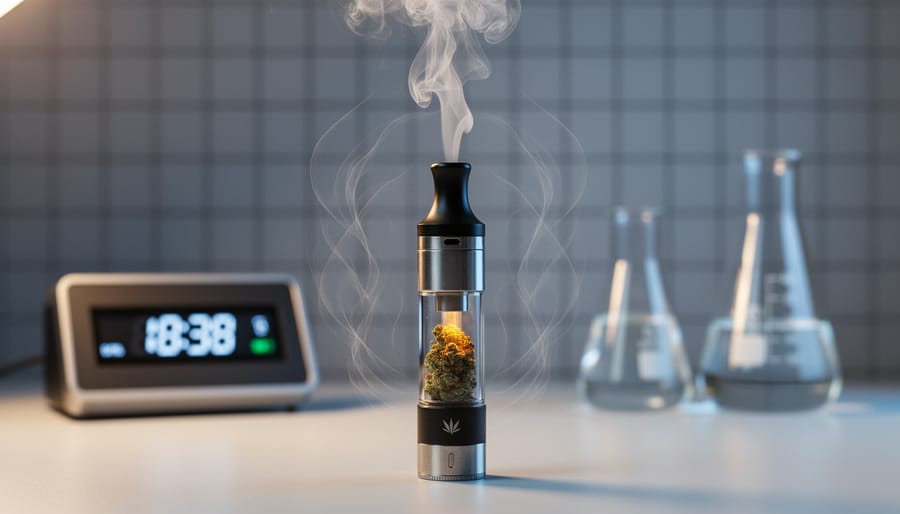
Decarboxylation is the chemical reaction that converts THCa into THC by removing a carboxyl group (COOH) from the molecule. This transformation occurs when cannabis is exposed to heat, fundamentally changing both the compound’s structure and its effects on the human body.
The process itself is straightforward: heat energy breaks the molecular bond holding the carboxyl group to THCa, releasing carbon dioxide (CO2) and leaving behind THC. Without this reaction, cannabis would produce no psychoactive effects, no matter how much you consumed. The carboxyl group in THCa prevents the molecule from binding efficiently to your brain’s CB1 receptors, which is why eating raw cannabis flowers won’t get you high.
- Decarboxylation Temperature
- The heat range (typically 220-315°F) at which THCa begins converting to THC. Higher temperatures accelerate the process but may degrade other beneficial compounds.
- Activation Point
- The minimum temperature threshold where decarboxylation starts occurring at a meaningful rate, generally around 220°F for THCa.
- Cannabinoid Conversion
- The percentage of THCa that successfully transforms into THC during heating, which varies based on temperature and duration of exposure.
- Heat-Induced Transformation
- The overall chemical change triggered by thermal energy that restructures cannabinoid molecules from their acidic precursor forms into active compounds.
Vaping excels at decarboxylation because it provides precise, controlled heat directly to the cannabis material. Most vaporizers operate between 300-430°F, well within the range needed for efficient conversion. The hot air or conduction heating rapidly brings THCa to its activation point, triggering near-instantaneous decarboxylation as you inhale.
Time matters as much as temperature. At 240°F, full decarboxylation might take 40 minutes in an oven, but vaping concentrates that heat into seconds of direct contact. This rapid conversion explains why vaping feels immediate compared to edibles, which require both decarboxylation during cooking and digestion time.
The efficiency of this process depends on your device and settings. Lower temperatures (315-350°F) produce partial decarboxylation, preserving more THCa while creating some THC. Higher settings (380-430°F) convert nearly all available THCa into THC, maximizing psychoactive potential but potentially degrading heat-sensitive terpenes. Understanding these thresholds lets you control your experience through temperature selection rather than just choosing different products.
Comparing THCa and THC Across Key Vaping Dimensions
Psychoactive Effects and Experience
The psychoactive divide between THCa and decarboxylated THC represents the most significant practical difference for vapers. THCa produces no intoxicating effects in its raw form, you won’t experience euphoria, altered perception, or the characteristic “high” associated with cannabis. This happens because THCa’s molecular structure prevents it from binding effectively to CB1 receptors in your brain, the primary pathway for psychoactive effects.
When you vape THCa at temperatures sufficient for decarboxylation, heat transforms it into THC, which binds readily to those same CB1 receptors. The result is the familiar psychoactive experience: euphoria, relaxation, altered time perception, and heightened sensory awareness. The intensity depends on temperature, duration of heating, and the concentration you’re vaping.
Some users deliberately choose THCa products or lower vaping temperatures to minimize psychoactivity while still accessing potential therapeutic benefits. This approach appeals to those who need to remain clear-headed for work, parenting responsibilities, or daytime activities. Medical patients often prefer non-intoxicating options when managing inflammation or nausea without cognitive impairment.
Conversely, recreational users and some medical patients specifically seek THC’s psychoactive effects for stress relief, mood elevation, or simply enjoyment. The high provides relaxation and perspective shifts that many find valuable for unwinding or creative pursuits.
Your vaping temperature directly controls this outcome. Staying below 220°F preserves more THCa and minimizes psychoactivity, while temperatures above 315°F ensure complete decarboxylation and full psychoactive potential. This temperature control gives you a spectrum of experiences rather than a binary choice.
Vaping Temperature Requirements
Understanding the right temperature settings makes all the difference when vaping THCa versus already-decarboxylated THC products.
When you vape raw THCa-rich cannabis or concentrates, you’re working with two processes simultaneously: decarboxylation and vaporization. THCa needs sustained heat between 220°F and 315°F to shed its carboxyl group and convert into psychoactive THC, only then does the THC vaporize and deliver its effects. This means your device must reach and maintain temperatures in the upper end of this range, typically around 300-315°F, to ensure complete decarboxylation during your draw. Many of the best pod vapes and advanced temperature-controlled devices allow you to dial in these precise settings, though users often need to experiment within this window to find their sweet spot for complete activation without combustion.
Already-decarboxylated THC products, by contrast, skip the conversion step entirely. Since the THC is pre-activated, these oils and distillates vaporize efficiently at lower temperatures, generally between 315°F and 440°F, with many users preferring the 350-390°F range for optimal flavor and effect balance. Lower temperatures preserve terpenes and provide smoother hits, while higher settings within this range produce denser vapor and more intense effects.
The practical implication: vaping THCa demands more heat and precision to activate the compound during use, whereas THC products offer more temperature flexibility and can be enjoyed at settings that prioritize taste and throat comfort. Your device’s temperature control capabilities directly determine how effectively you can work with each cannabinoid form.
Potential Therapeutic Properties
Research into THCa and THC reveals distinct therapeutic profiles, though both warrant cautious interpretation given the evolving state of cannabis science.
THCa shows promise for users seeking anti-inflammatory benefits without intoxication. Preliminary studies suggest it may reduce inflammation through interaction with the endocannabinoid system, potentially helping conditions like arthritis or inflammatory bowel disease. Early research also points to possible neuroprotective properties that could support brain health, though human clinical trials remain limited. Some medical cannabis patients report relief from nausea and muscle spasms when using THCa-rich products, making it appealing for daytime therapeutic use when mental clarity matters.
Decarboxylated THC, by contrast, offers well-documented psychoactive effects that many find therapeutically valuable. It’s recognized for pain management across various conditions, from chronic pain to migraines. THC’s appetite-stimulating properties make it particularly useful for patients undergoing chemotherapy or dealing with wasting conditions. Its muscle-relaxing and anxiety-reducing effects benefit those with spasticity, PTSD, or insomnia, though responses vary individually. Unlike discussions around CBD vs THC for anxiety management, THC’s psychoactivity remains central to many of its therapeutic applications.
The evidence base differs significantly between compounds. THC has decades of research and established medical applications in several jurisdictions. THCa research remains nascent, with most findings from preclinical studies rather than controlled human trials. Medical experts emphasize that while anecdotal reports are encouraging, definitive therapeutic claims require more rigorous investigation.
Your choice depends on whether you prioritize non-intoxicating anti-inflammatory support or seek THC’s broader therapeutic toolkit alongside its psychoactive effects.
Product Availability and Forms
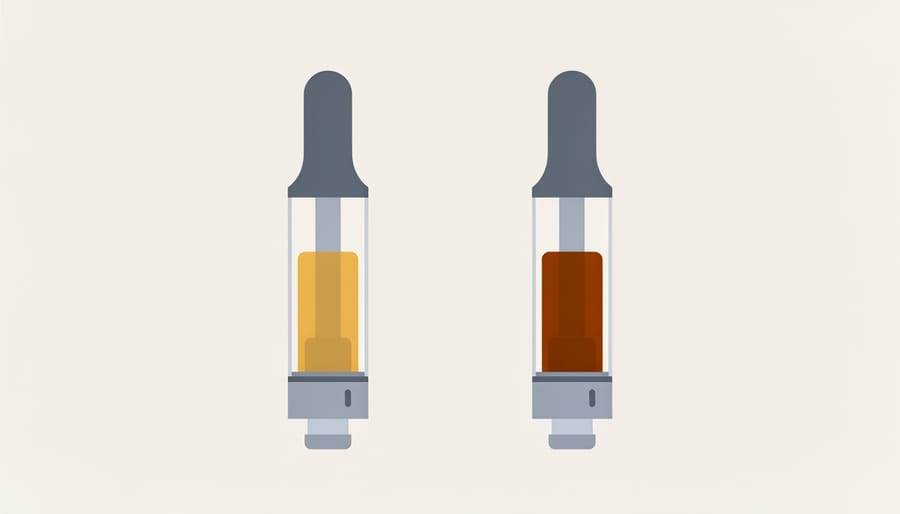
THC-dominant vaping products saturate the market, available in virtually every dispensary and online cannabis retailer. You’ll find THC cartridges, disposable vapes, live resin, distillate, shatter, wax, and pre-ground flower specifically marketed for vaping. These products come lab-tested with clear THC percentages, and manufacturers design them for consistent psychoactive effects. The selection spans budget options to premium full-spectrum extracts, with standardized hardware compatibility making it simple to choose vape juice or concentrates that fit your device.
THCa-rich products present a more limited but growing market. Raw cannabis flower naturally contains high THCa before heating, so any fresh bud technically qualifies, though it’s rarely labeled specifically as “THCa flower” for vaping. THCa crystalline and diamonds have emerged as specialty concentrates, prized by dabbers who control decarboxylation through precise temperature. Some newer vape cartridges advertise “high THCa” content, targeting users who want minimal psychoactivity or prefer gradual conversion during low-temperature sessions.
The key difference: THC products dominate because most vapers want the activated compound ready to deliver immediate effects. THCa options require more intentional searching, often found in medical dispensaries or specialty shops catering to wellness-focused consumers. If you’re seeking THCa specifically, expect fewer choices and potentially higher prices due to specialized extraction and handling that preserves the non-decarboxylated form.
Who Should Choose THCa for Vaping?
THCa vaping suits users who want cannabis benefits without the intoxicating high. If you need to stay clear-headed throughout your day or simply don’t enjoy feeling altered, THCa provides a viable option that won’t interfere with work, social obligations, or activities requiring full mental clarity.
Medical cannabis users exploring anti-inflammatory and neuroprotective properties often gravitate toward THCa. Research suggests THCa may help manage inflammation-related conditions without the cognitive impairment that accompanies THC consumption. This makes it particularly appealing for patients who need consistent symptom relief during working hours or while caring for family members.
Several user types typically find THCa vaping most suitable:
- Professionals and daytime users who need symptom management without impairment
- THC-sensitive individuals who experience anxiety, paranoia, or discomfort from psychoactive effects
- Medical patients targeting inflammation, nausea, or neuroprotection specifically
- Cannabis newcomers wanting to explore cannabinoid benefits gradually
- Athletes and active individuals seeking recovery support without affecting performance
Temperature control enthusiasts also benefit from THCa-rich products. By keeping vaping temperatures below 220°F, you can consume THCa with minimal conversion to THC, allowing precise control over your experience. This appeals to users who value customization and want to experiment with different cannabinoid ratios.
Location matters too. If you live somewhere with workplace drug testing or strict impairment laws, THCa’s non-intoxicating nature provides a safer legal position. You can potentially use it without the same concerns about testing positive or violating regulations, though you should always verify your specific situation.
Parents, caregivers, and anyone with responsibilities requiring constant alertness often prefer THCa for these practical reasons. You get potential therapeutic benefits while maintaining the mental sharpness needed for daily demands.
Who Should Choose Full Decarboxylation (THC) for Vaping?
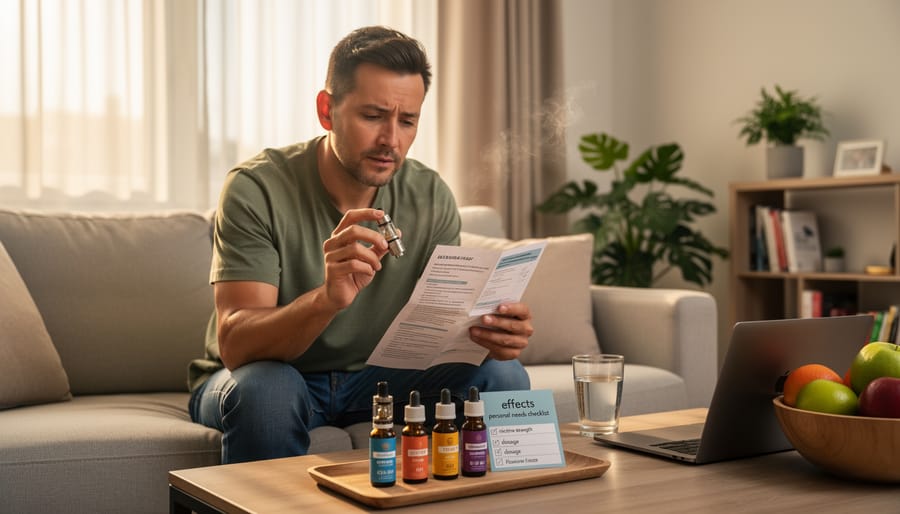
Fully decarboxylated THC suits vapers who want the classic cannabis experience: psychoactive effects, euphoria, and the altered state of consciousness that distinguishes THC from its precursor. If you’re seeking that familiar high, temperature-activated THC delivers it reliably.
Recreational users form the largest group choosing full decarboxylation. You’re after relaxation, social enhancement, creativity boosts, or simply the enjoyable mental shift cannabis provides. Traditional vaping at 350-430°F ensures complete decarboxylation, converting any remaining THCa into active THC for maximum psychoactive impact. Before vaping THC products, verify you meet local vaping age rules and consumption laws in your jurisdiction.
Certain medical patients benefit specifically from THC’s psychoactive properties. Those managing chronic pain often find that THC provides relief that non-intoxicating cannabinoids can’t match. The compound’s interaction with CB1 receptors in the nervous system creates analgesic effects that reduce pain perception. Similarly, patients dealing with severe nausea, appetite loss, or muscle spasticity may require THC’s particular therapeutic profile rather than THCa’s more subtle benefits.
Fully decarboxylated THC works best for:
- Recreational users seeking psychoactive effects and the traditional cannabis high
- Evening or nighttime users looking for relaxation and sleep support
- Individuals managing chronic pain, severe nausea, or appetite issues requiring THC’s specific relief
- Experienced cannabis users comfortable with psychoactive compounds and their effects
Experienced cannabis consumers often prefer full decarboxylation because they understand their tolerance, know how different THC concentrations affect them, and can control their dosing accordingly. You’ve likely developed preferences for specific strains, terpene profiles, and THC percentages that deliver your desired experience.
Choose THC when functionality during the high isn’t a concern. If you’re vaping before bed, during leisure time, or in settings where impairment is safe and legal, fully activated THC offers the complete spectrum of effects that many users seek from cannabis.
Safety Considerations and Responsible Use
Whether you’re exploring THCa’s non-intoxicating properties or seeking THC’s full psychoactive effects, responsible vaping starts with understanding the risks and taking appropriate precautions.
Temperature control matters for safety and experience. Set your device between 220-315°F for controlled THCa-to-THC conversion, or stay below 350°F when vaping pre-activated THC to avoid harshness and potential degradation into less desirable compounds. Excessive heat (above 450°F) can produce irritating byproducts that stress your lungs.
Source quality products from licensed dispensaries whenever possible. Third-party lab testing verifies cannabinoid content, confirms absence of pesticides and heavy metals, and ensures you’re getting what the label claims. Learn to spot fake vape cartridges by checking for proper licensing information, batch numbers, and sealed packaging, counterfeit products may contain harmful cutting agents or contaminants.
Know your legal landscape before purchasing. THC remains federally illegal in the United States despite state-level legalization, while THCa occupies a legal grey area in some jurisdictions since it’s technically non-psychoactive in raw form. Check your local laws regarding possession, use, and transportation of cannabis products.
Start low and go slow, especially with decarboxylated THC. First-time users should take a single inhalation and wait 15-30 minutes to assess effects before continuing. THC’s psychoactive effects can feel overwhelming if you consume too much too quickly.
Avoid vaping if you’re pregnant, breastfeeding, or have respiratory conditions. Both THCa and THC inhalation introduce particulates and compounds into your lungs. If you have asthma, COPD, or cardiovascular issues, consult your healthcare provider before vaping any cannabis products. Never operate vehicles or heavy machinery while experiencing THC’s intoxicating effects.
Common Questions About THCa and THC Decarboxylation
Does all THCa turn into THC when vaped?
Not necessarily. Decarboxylation efficiency depends on your vaping temperature and duration, higher temperatures convert more THCa, while lower temperatures (below 220°F) may leave some THCa intact. Most standard vaping temperatures (350-400°F) convert the majority of THCa into THC, though complete conversion is difficult to achieve in practice.
Can you control how much THCa converts to THC?
Yes, through precise temperature control. Vaping at temperatures just below the decarboxylation threshold (under 220°F) preserves more THCa, while higher settings promote fuller conversion. Adjustable-temperature vaporizers give you the most control over this process, letting you fine-tune your cannabinoid profile.
Will THCa show up on drug tests?
Standard drug tests screen for THC metabolites, not THCa itself. However, if any THCa converts to THC in your body or through heat exposure before testing, it will produce the same metabolites that trigger positive results. If you’re subject to drug testing, THCa products carry similar risks to THC products.
How long does decarboxylation take in a vaporizer?
Decarboxylation in a vaporizer happens within seconds to minutes, much faster than oven methods that require 30-45 minutes. The concentrated heat applied directly to the material accelerates the process, most of the conversion occurs during your first few draws at proper temperature.
Beyond these common questions, many vapers wonder whether they can mix THCa and THC products in the same session. You absolutely can, and doing so gives you a blended experience that combines some non-psychoactive benefits with controlled psychoactivity. Start with lower temperatures to preserve THCa content initially, then increase the heat mid-session if you want stronger THC effects.
Another practical consideration involves storage. THCa products require careful handling since exposure to heat, light, or prolonged air contact can trigger premature decarboxylation. Keep THCa-rich concentrates and cartridges in cool, dark places, and avoid leaving them in hot cars or direct sunlight. Already-decarboxylated THC products are more stable but still benefit from proper storage to maintain potency.
If you’re transitioning between THCa and THC vaping, expect an adjustment period. Your tolerance to THC doesn’t necessarily translate to THCa’s effects, and vice versa. Start with lower doses when switching products, and give yourself time to understand how each form affects you individually before settling on a routine.
What Each Option Is
THCa and THC represent two distinct forms of the same cannabinoid compound, each offering different experiences when vaped.
THCa, or tetrahydrocannabinolic acid, is the raw cannabinoid found naturally in living cannabis plants. Think of it as the “inactive” version, it exists in fresh or minimally processed cannabis flower and concentrates. When you vape THCa at lower temperatures or consume it without heat, it remains non-psychoactive and won’t produce the characteristic cannabis high. Users seeking potential therapeutic benefits without intoxication gravitate toward THCa-rich products.
THC, or delta-9-tetrahydrocannabinol, is what THCa becomes after heat removes a carboxyl group from its molecular structure. This activated form is the psychoactive compound responsible for the euphoric effects cannabis is known for. Most standard vape products contain pre-decarboxylated THC, meaning the conversion has already occurred during processing. When you vape these products, you’re directly inhaling active THC that produces immediate psychoactive effects.
The key distinction: THCa requires conversion through heat to become psychoactive, while THC is ready to produce effects as soon as it’s inhaled.
Choosing between THCa and fully decarboxylated THC for vaping isn’t about finding a universally “better” option, it’s about matching the cannabinoid form to your specific needs and preferences. If you’re seeking the therapeutic potential of cannabinoids without intoxication, vaping at lower temperatures to preserve THCa or using specialized THCa products offers a clear path. Conversely, if you want the traditional psychoactive experience or require THC’s specific medical benefits, higher vaping temperatures that fully convert THCa into THC deliver what you’re looking for.
The beauty of vaping lies in its precise temperature control, which puts you in the driver’s seat. You can dial in settings that minimize decarboxylation for a gentler, clearer experience, or crank up the heat for maximum THC activation. Many experienced vapers experiment with different temperature ranges and products to discover their sweet spot, some even adjust settings throughout the day based on their activities and needs.
Start with quality products from reputable sources, pay attention to how different temperatures affect your experience, and give yourself permission to adjust. Your ideal approach might involve THCa-dominant products in the morning and fully activated THC in the evening, or a consistent preference for one form over the other. There’s no single correct answer, only what works best for your body, lifestyle, and goals. Take your time exploring the spectrum between these two forms, and you’ll develop an informed, personalized vaping routine that serves you well.